Rated Excellent
Trusted by 1000’s of customers
Earn Rewards
Get points with every purchase
Expert Advice
Professional tips for perfect detailingSay goodbye to dull, yellowed headlights. Our headlight cleaner and restoration kits restore your headlights to like-new condition, and a specially formulated sealant protects against future yellowing and oxidation. Clear and bright headlights are vital for safe driving at night, as well as for passing your annual MOT. Our headlight restoration kits are easy to use and get professional results with no power tools required..
-
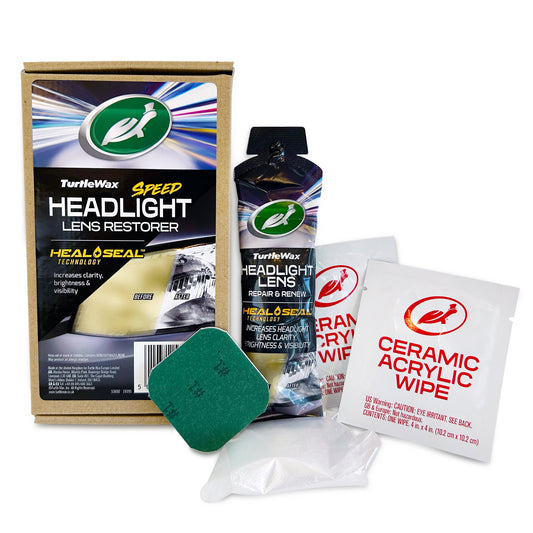
Speed Headlight Lens Repair & Renew Kit
Regular price £15.00Sale price £15.00 Regular priceUnit price per -
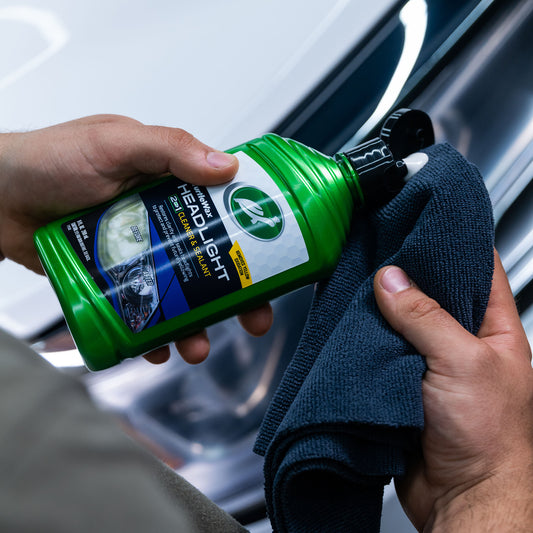
Headlight 2 in 1 Cleaner & Sealant, 300ml
Regular price £7.00Sale price £7.00 Regular priceUnit price per -
Renew & Restore Wipes, 8 pack
Regular price £10.00Sale price £10.00 Regular priceUnit price per -
Headlight Lens Renewal Wipes
Regular price £8.00Sale price £8.00 Regular priceUnit price per



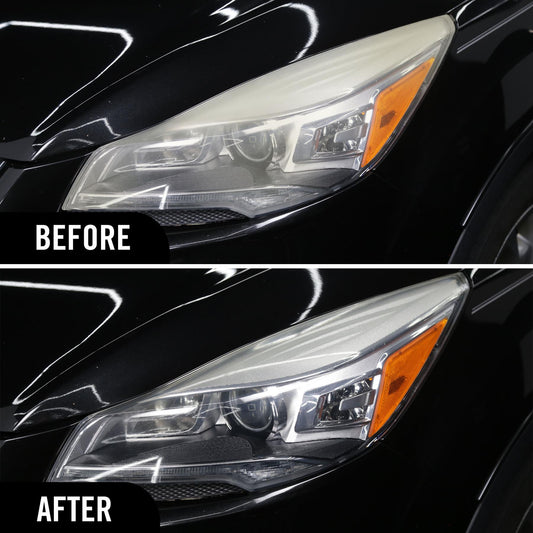

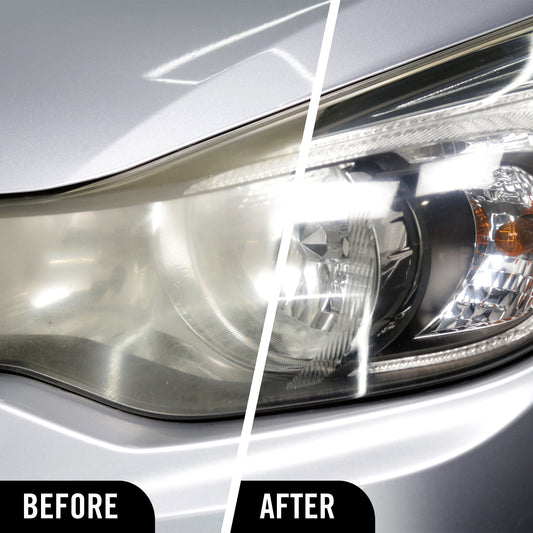
Why Headlights Turn Yellow and Cloudy
Dull, yellowing headlights affect every modern car at some point, brought on by a range of environmental factors. Modern cars use plastic for their headlight housing, while older cars from before the 1990s use glass. Plastic is much safer and more durable, but it brings the problem of oxidation and cloudiness. That’s why headlight restoration with a UV-protective sealant is an essential part of annual car maintenance.
- UV oxidation - UV light from the sun breaks down the protective clear coat on plastic headlight lenses over time. This is known as oxidation, which causes them to take on a yellowish tone and lose clarity. This reduces the brightness and effectiveness of the headlights.
- Road debris & wear - Everyday driving means exposure to stones, grit and other debris bouncing up from the road and creating tiny scratches on the surface of your headlights. Dust and dirt get trapped in the tiny abrasions, creating a dull and cloudy appearance over time.
- Environmental damage - Everything from air pollution to harsh weather and salt from sea air can degrade the surface of headlight lenses, reducing their brightness and effectiveness.
- Water vapour - Condensation inside the headlight housing usually means the seals have degraded or broken, allowing moisture to get inside. This negatively affects the clarity of the headlight beams.
Why Headlight Restoration Matters
Safety & Visibility
The primary benefit and reason for headlight restoration is safety. Cloudy headlight lenses can reduce beam brightness by more than 50%, directly affecting your visibility when driving at night. This means more difficulty seeing pedestrians, anticipating corners, seeing road signs and many other hazards. Visibility is a vital part of nighttime driving, both for your safety as a driver and for other road users.
MOT Compliance
Cloudy headlights are a common point of failure in MOT tests. Headlights are a vital safety feature of any car, and must provide enough illumination for visibility at night. Leaving your headlights to degrade to the point of MOT failure could also mean they’re much more expensive to fix or even replace.
Vehicle Appearance & Value
Dull and yellowing headlights can really bring down the overall appearance of a vehicle, making it look aged and neglected. Naturally, this isn’t great to look at every day, but it can also affect its value if you plan to sell. A simple DIY headlight restoration can dramatically improve a car’s looks and give a much better first impression for potential buyers.
How to Assess Your Headlight Condition
To check your headlights and assess their condition, inspect them in daylight to have the best chance of spotting issues. A good way of checking is to compare the look of your headlights with newer vehicles whenever you’re parked next to them, seeing if yours look duller or cloudier.
-
Light surface cloudiness - A slight haze that shows up more in direct sunlight indicates light oxidation and minimal yellowing.
-
Recommendation: 2 in 1 Cleaner & Sealant.
-
Moderate yellowing & oxidation - More noticeable discolouration in the headlight lenses, and reduced brightness when driving at night.
-
Recommendation: Speed Headlight Lens Repair & Renew Kit.
-
Heavy oxidation - Severe yellowing of the headlight housing, visible pitting and surface cloudiness, and significantly dimmed beam output.
-
Recommendation: Speed Headlight Lens Repair & Renew Kit, likely multiple applications.
-
Beyond restoration - Cracks in the headlight housing, broken seals, or moisture inside the headlights.
-
Recommendation: Likely needs professional repair or a full replacement.
Choosing Your Headlight Restoration Solution
Take a look at this handy table to see our different headlight restoration products and how they’re best used. Our products are designed for simple hand application, so you don’t need power tools or special skills to get great results.
|
Product Name |
Best For |
Process |
Time Required |
Key Benefit |
|
Light cloudiness and minor yellowing |
Apply by hand, wipe clean |
10-15 minutes |
Quick fix with UV protection |
|
|
Moderate to heavy oxidisation |
Wash and dry headlight, mask off paintwork, apply compound, sand if needed, buff and dry, seal with acrylic clear coat, wipe |
20-30 minutes |
Comprehensive restoration |
Our easy-to-use headlight restoration kit and restorer liquid deliver superior results for like-new headlights in minutes. The simple hand application requires no power tools, as with other headlight restoration products.
Not only will the results radically improve the look of your car, but our Headlight Restoration Kit will also improve the safety of your nighttime driving, restoring your headlight clarity to its original brightness.
How Headlight Restoration Works
- Wash and dry your headlights before starting, ensuring they’re free from dirt and debris.
- Apply the restoration product as directed, usually starting with the clarifying compound to remove oxidation. This can be done with a microfibre cloth.
- Polish as needed before applying a final protective sealant (if using our full restoration kit).
The process usually takes around 30 minutes or less per headlight, depending on how much work is needed to restore them. Once sealed and completed, the results should last for around 12-24 months, depending on environmental factors. Continued maintenance will keep your headlights looking their best.
More detailed instructions with photos can be found in our How to Restore Headlights blog.
Headlight Restoration vs Professional Services
DIY Restoration
- Cost - £6.50-£12 for a 2-in-1 cleaner up to a full repair and renew kit.
- Time - 30-60 minutes to restore both headlights.
- Best for - Surface oxidation, cloudiness and light scratches.
- Results - Significant improvement to like-new, with 12-24 months durability.
- Added benefit - Can reapply to maintain clear headlights as needed.
Professional Services
- Cost - £50-£150 at a professional garage.
- Time - Drop off, typically done the same day.
- Best for - Severe damage or if you prefer not to do your own repairs.
- Results - Professional finish with similar durability as DIY.
When to Choose a Professional
- Deep cracks in the headlight housing
- Internal moisture due to seal damage
- Significant lens pitting and scratches
DIY Home Remedies: Do They Work?
Taking the DIY approach sometimes means trying out less conventional methods before investing in a product. We understand the need to try every possibility, so here’s the honest truth about headlight home remedies:
Toothpaste Method
Applying toothpaste provides mild abrasion to remove surface-level imperfections from the headlights, which can achieve some improvement in clarity. The problem is that it’s only a very temporary solution and needs frequent reapplication. It also lacks any kind of UV protection and can even cause new scratches to form.
WD-40 Method
WD-40 is something many of us have to hand, and it can provide a shiny coating to your headlights. However, it will quickly wash away and doesn’t provide any kind of repair or restoration, as well as lacking long-term UV protection. It’s just a temporary cosmetic effect that unfortunately doesn’t address the causes of cloudy headlights.
Baking Soda/Vinegar Methods
Using household items like baking soda or vinegar has a similar effect to toothpaste. It can help to clean and shine up headlight lenses, but it’s a temporary solution that doesn’t deal with the root problems. It can also take a lot more time and work to get a result that looks good, only for it not to last very long at all.
While these methods can provide temporary cosmetic improvement, dedicated headlight restoration products offer permanent results with UV protection to prevent future degradation.
Preventing Future Headlight Degradation
Once you’ve done your headlight restoration, you naturally want to keep them looking their best for as long as possible. While future maintenance will always be needed, there are ways you can minimise the degradation:
- Regular washing - Keeping your headlights clean and free from dirt and debris will help to minimise contaminants that can accelerate oxidation. Aim to wash them at least monthly.
- Apply car wax - Don’t forget to wax your headlights when doing the rest of your car, helping to maintain a protective barrier.
- Park in the shade - Wherever possible, keep your car parked in the shade. Minimising UV exposure will help to slow the degradation of your headlight lenses.
- Wash by hand - Automatic car washes can scratch the lenses of your headlights with their harsh brushes, so wash by hand as much as possible.
- Check for problems - Inspect the seals of your headlights every so often to look for signs of degradation or water intrusion.
Frequently Asked Questions
Why do headlights turn yellow and foggy?
Headlights turn yellow and foggy over time due to UV rays breaking down the protective barrier on the lenses. This degradation is also affected by environmental factors like road dust and dirt, pollution, and even salt spray from the sea. Modern plastic headlight lenses are more susceptible to going cloudy over time compared to older glass lenses, but plastic is also much safer.
Can I restore headlights without a power drill?
Yes, Turtle Wax headlight restoration products are designed to be applied by hand, getting excellent results without needing any power tools. You just need a microfiber cloth or other applicator to work in the product, making it easy to use for beginners.
Will headlight restoration pass MOT?
Properly restored headlights should meet MOT requirements when it comes to brightness and clarity. The test is for adequate beam illumination, so restoring your headlights will significantly improve light output. Just remember that DIY headlight restoration can’t fix major cracks or broken seals, which could also be a point of failure for an MOT test.
How long does headlight restoration last?
Once properly resorted and protected, your headlights should last for 12-24 months, depending on environmental factors like exposure to sunlight. Turtle Wax sealants provide a barrier against UV light to slow oxidation. Continued maintenance will help to extend your headlight restoration results.
Do I need to use sandpaper to restore headlights?
If your headlights only have light oxidation or scratches, you normally don’t need to use sandpaper. Turtle Wax products use a sandpaper-free approach to minimise impact on the lenses, instead using a compound method. More severe oxidation or surface damage might need sandpaper to help get a good result.
What’s the difference between a headlight cleaner and a restoration kit?
Headlight cleaner is suitable for light cloudiness and surface marks, providing a quick and easy way to restore clarity and brightness. A headlight restoration kit is a comprehensive solution for oxidation and surface damage, better suited for more intense cloudiness and yellowing. Both also contain UV protection against future degradation.
Can toothpaste remove headlight cloudiness?
Toothpaste can provide a temporary cosmetic improvement to headlights, but the results will quickly wash away. It also won’t provide long-term UV protection and can even introduce micro-scratches to the headlight surface.
Will WD-40 clean foggy headlights?
WD-40 will create a temporary shine for the headlight casing, but it doesn’t help to remove oxidation or surface damage. The effect will also wash away quickly in rain and won’t provide any lasting UV protection.
How do I know if my headlights need restoration or replacement?
Restoration can fix surface cloudiness and yellowing in headlights, as well as minor scratches and scuffs. A replacement might be needed if the headlight casing is cracked or moisture is causing internal condensation because of a broken seal. In most cases, oxidation can be fixed with DIY restoration, but always check for structural damage or more major problems before starting.
Can I restore plastic and glass headlights in the same way?
Modern cars use plastic lenses for the headlights, and most headlight restoration products are designed to be used on plastic. These products are safe to use on glass lenses but are optimised for plastic surfaces. Glass lenses are also much less prone to UV degradation and discolouration, so don’t need the same kind of restoration treatment.
Ready to restore clarity, safety, and MOT compliance to your vehicle? Visit our How-To section for complete headlight restoration guides, maintenance tips, and expert car care advice.